
For years, many print dealers viewed laser devices as the default choice for business environments. The technology was familiar, service teams knew the hardware, and customers recognized the brands. That assumption is changing. The print market is in the middle of a shift, driven by new customer expectations and by the realities dealers face every day. Service costs are rising. OEM support for some laser lines is shrinking. Margins are harder to protect. And customers are asking for devices that are easier to maintain, more cost-effective, and more sustainable.
Business inkjet technology has matured to a level that forces a new conversation. Dealers are discovering that inkjet can outperform laser in the areas that matter most today: uptime, waste reduction, power consumption, and service efficiency. This shift doesn’t mean laser no longer has a place. It does mean that the “laser first” mindset no longer reflects the needs of the modern office or the economics of today’s Managed Print landscape.
This blog breaks down the considerations that matter when choosing between laser and inkjet and offers a practical framework dealers can use as they build recommendations and shape their product strategy.
Why This Comparison Matters Now
Dealers are operating in a print environment that looks very different than it did even a few years ago. Several forces are driving the renewed focus on inkjet:
Less OEM Support for Laser Lines
Some manufacturers are reducing their investment in laser devices or streamlining product families. Fewer models and shorter product life cycles can create challenges for dealers who want predictable supply chains and long-term service stability.
Tighter Margins
Service organizations are under pressure. Components cost more, labor is harder to manage, and the traditional profitability model tied to laser fleets doesn’t stretch as far as it once did. Dealers need devices that reduce calls, not add to them.
Higher Customer Expectations
Organizations want equipment that works when they need it. They also want predictable cost of ownership, low energy consumption, and less waste. These expectations align well with the strengths of modern business inkjet.
A Growing Need for Differentiation
Competing on hardware alone no longer sets dealers apart. The value now comes from helping customers reduce downtime, improve efficiency, and support sustainability goals. Device choice plays a major role in that conversation.
Given these market factors, print dealers are rethinking long-standing assumptions and weighing inkjet as a strategic part of their lineup.
Understanding the Technology Differences
A quick look at how each technology works makes it easier to understand why inkjet has gained momentum.
How Laser Technology Operates
Laser devices use toner, drums, fusers, and heat to bond toner to the page. This means multiple moving parts, several consumable components, and repetitive wear that service teams must manage. Fusers and high-heat elements are common failure points. The technology has been dependable for decades, but it carries inherent maintenance requirements.
Laser also requires significant energy to heat components, and warm-up times can impact user experience in busy office environments.
How Business Inkjet Works Today
Business inkjet technology has evolved far beyond the consumer-grade devices that shaped early perceptions. Many modern systems use heat-free print processes and advanced printheads designed for high-volume office use. These devices operate with fewer mechanical components, which reduces points of failure and shortens service time.
Because inkjet does not require heat, energy usage is far lower. The printing process is straightforward and consistent, leading to predictable output and strong reliability.
Why These Differences Matter
The core distinction isn’t simply toner versus ink. It’s the operational impact: how devices behave in real environments, how often they require service, and how much time and inventory dealers must invest to keep them running at a high level.
Reliability and Uptime: A Top Priority for Customers
When customers think about print, they think about whether the device works. Dealers, however, must consider what it takes behind the scenes to keep that device working. Laser devices contain multiple components that must be replaced at regular intervals. Each of these introduces downtime risks.
With business inkjet, the reduced number of consumables and mechanical parts translates into more predictable performance. Devices often run longer between service calls, and issues that do arise tend to be simpler to resolve.
For customers, this means fewer interruptions. For dealers, it means less strain on the service team and a more balanced workload. Uptime has always been important in managed print, but as fleets become leaner and budgets tighten, it has become one of the most influential factors in the recommendation process.
Parts Inventory and Service Efficiency
Managing a laser fleet requires a significant investment in parts, components, and consumables. Dealers must stock fusers, transfer belts, drums, developers, and a variety of toner supplies. Each item adds cost and complexity. It also creates pressure for service teams responsible for identifying, replacing, and monitoring components across hundreds or thousands of devices.
Inkjet simplifies this. With fewer parts to replace and far fewer consumables to track, dealers can reduce inventory costs and streamline their service processes. Service calls tend to be shorter, less frequent, and more predictable. Many dealers find that moving part of their fleet to inkjet allows them to improve margins, reduce truck rolls, and free technicians to focus on higher-value work.
Laser remains useful in many settings, but this is a clear example of why inkjet often works better when dealers need stable, manageable service demands.
Faster and Easier Deployment
Configuration and rollout processes are another area where inkjet has made meaningful gains. Many business inkjet models arrive with fewer steps required during setup. Firmware updates, calibration adjustments, and mechanical alignments tend to be simpler than with laser devices.
For dealers handling large deployments or working with customers who need quick installation timelines, this can make a noticeable difference. Faster deployment means less time on-site, fewer return visits, and an improved customer experience from day one.
Waste Reduction and Sustainability Expectations
Waste output has become a significant factor in purchasing decisions. Laser devices produce a range of consumables over their lifetime, including waste toner bottles, drums, fusers, and other components that must be replaced and disposed of.
Inkjet devices typically generate far less waste. With fewer consumables and fewer parts reaching end of life, the overall environmental footprint is smaller. Organizations with sustainability programs or reporting requirements increasingly prefer this profile. For dealers, waste reduction can differentiate proposals and help win bids where environmental considerations play a role.
Energy Consumption and Total Cost of Operation
Laser devices require heat to operate, which leads to higher power usage. This becomes more noticeable in environments where devices run frequently or stay in ready mode throughout the day. Inkjet, especially heat-free inkjet, uses far less energy.
Lower energy consumption contributes to a more favorable total cost of operation for customers. It also supports customers with environmental goals or strict internal energy policies. As more organizations evaluate their equipment through a sustainability lens, energy efficiency becomes an important proof point.
When Laser Is Still the Right Choice
Laser technology continues to excel in certain scenarios, and a balanced product lineup includes both options. Laser remains a strong fit for:
- Very high-volume monochrome environments
- Specialized printing applications with heavy coverage
- Customers with legacy workflows optimized for laser output
- Environments where specific toner characteristics are required
The goal for dealers is not to replace laser entirely but to understand where laser is still the better fit and where inkjet provides stronger long-term value.
How to Guide Customers Through the Decision
Dealers who lead with insight rather than hardware specs build stronger, more trusted relationships. A simple framework helps guide conversations:
- Volume: How much does the customer print each month?
- Service expectations: Do they prioritize uptime, predictability, or long-term stability?
- Budget: Are they focused on reducing cost of ownership or minimizing service interruptions?
- Environmental goals: Are energy use and waste reduction important?
- Deployment needs: Does the customer require fast installation or have multiple locations?
- IT preferences: How comfortable is the customer with managing fleet updates and configurations?
These questions shift the conversation away from simply choosing a device and toward selecting the right technology strategy.
Preparing for 2026 and Beyond
The shift toward inkjet isn’t a short-lived trend. It reflects a broader change in how organizations think about print and how dealers need to plan for long-term service profitability. As laser support fluctuates and customer expectations continue to evolve, inkjet offers a pathway to more predictable service, lower internal costs, and a stronger competitive position.
Dealers who understand both technologies and can clearly explain the differences will be better equipped to build trust with customers and align their product recommendations with real business needs.
Want to Go Deeper? Watch the Webinar
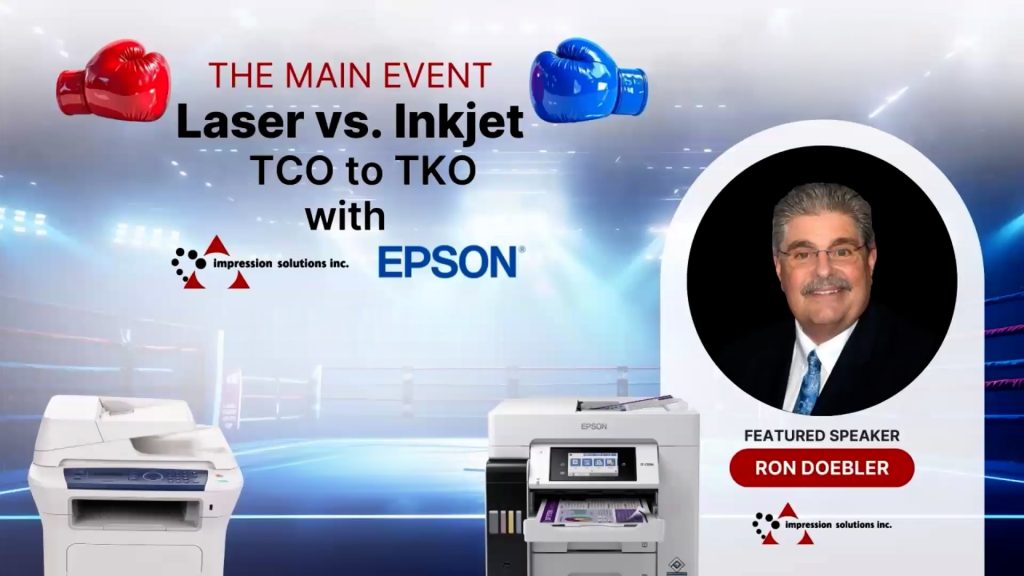
The Main Event: Laser vs. Inkjet
Epson and ISI’s fast, fact-focused webinar is now available on demand. Designed for Copier Dealers and Managed Print providers preparing for 2026, this recording covers how reliability, parts management, device setup, waste reduction, and energy usage compare across the two technologies—complete with proof points you can use in real sales conversations.
If you’re planning next year’s product strategy, this session will help you understand where the market is heading and how to stay competitive. Watch the recording now.
About ISI
Impression Solutions Inc. is a value-add, full-service distributor of printing and imaging solutions. ISI offers their dealers, resellers and their end users unparalleled service and support as an OEM full line authorized distributor of Kyocera monochrome and color printers, MFPs, Wide Format Printers, printer accessories, printer supplies and customized printing solutions.
Recent launches include Virtual Inventory Services and IS Docs, a turnkey Document Management program for Imaging Dealers to grow their monthly recurring revenues (MRR).
ISI maintains a full inventory of over 2,200 SKUs of printer products ready for same-day shipment from their 35,000 square feet of warehousing space in 5 distribution centers from coast to coast.